Think Outside the Box: The Power of Customized Dashboards in Electronics Manufacturing

With the rise of data analysis and processing software, using and interpreting available factory data has become both easier and more complex. The days of spending hours identifying the key variables that require close examination –– manually collecting that data before finally beginning the analyses, are long gone.
Today, machine connectivity and data integrated into an analysis platform allow for major automation improvements in data collection, and make it possible to focus efforts on what truly matters:
- Analyzing reliable, relevant, rich data
- Drawing impactful conclusions to improve production efficiency and machine performance
- Making better use of existing equipment
While automating data collection facilitates access to information, without properly parsing or organizing this data in meaningful way, it can be quite overwhelming. It does not offer new analyses, correlations, or avenues to optimize production or quality management. That’s where customized dashboards fill this gap by intelligently calculating that collected data to then properly identify opportunities for improvement.
Each employee views and interprets operations through the lens of their own role. For example, a high‑level executive will not pay attention to the same data as a quality assurance engineer or an operator. There may be overlaps in their needs, but without personalization, and without fully leveraging a data analysis platform, it can be difficult to obtain a global view that works for all these roles. Allowing the creation of customized dashboards gives everyone access to information that is useful and relevant to their work, while providing data tailored to their specific needs..
To better illustrate these realities, the following sections focus on two specific roles within a company and highlight how personalized dashboards can make a notable difference by giving each role clear visibility into what they need to monitor
Production Manager
The product manager’s main goal is to ensure smooth operations and will typically require the following in an analytics platform:
• See at a glance whether production lines are running as expected
• Know if production orders are meeting their deadlines
• Identify bottlenecks
• Quickly be alerted to delays or incidents
• Monitor machine performance
Some of these needs may be partially covered by default dashboards, giving the manager an initial starting point. However, they can quickly become limited, as these views generally lack context and aren’t precise enough. For example, a generic dashboard wouldn’t enable a Production Manager to:
• Get clear answers to critical questions when KPIs are unclear
• Easily spot priorities or critical areas at any given time
• Quickly isolate the root cause of a slowdown or issue
A generic dashboard shows “what is happening,” but not “why it is happening” or “where to act first.”
To anticipate, coordinate, and optimize actions, the Production Manager needs a view that truly reflects their reality: contextualized data, indicators prioritized according to their needs, personalized alerts based on specific production thresholds, as well as the ability to move quickly from site‑level to lines and machines.
All of which can be achieved within an analytics platform that includes customized dashboards
Machine Operator
Unlike the Production Manager who needs a global view, a machine operator must stay focused on the immediate state of their machine (or machines) and the necessary actions to keep the line productive. Their needs are very different and they will be concerned with:
• Whether their machine is running correctly in real-time
• Instant detection of any anomalies (defects, placement errors, feeding issues, unplanned stops)
• Status of preparation of the next work order
• Immediate notification of what has to be addressed without navigating through excessive information
• Alerts to prevent performance drift
A generic dashboard rarely meets these needs because it:
• Shows too much global information
• Displays KPIs meant for the entire site rather than the operator’s machine
• Provides few (or no) clear visual indicators to help spot issues in real-time
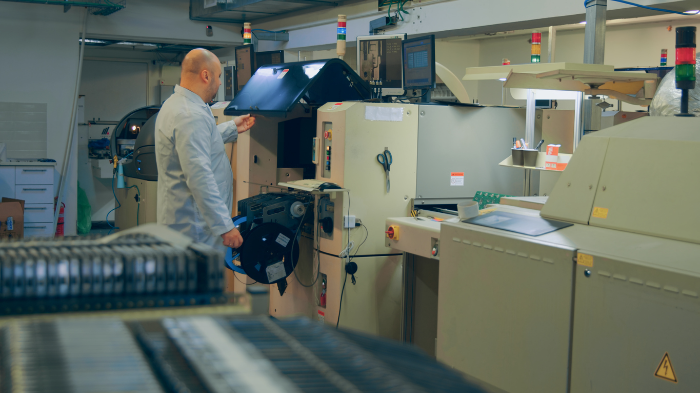
In other words, a generic dashboard is not operational for such a tactical, in-the-moment role.
A machine operator needs a view that reflects their machine, their context, their line, and guides them quickly toward the right actions. A personalized dashboard offers enormous value:
• Automatically filters information to show only what is relevant
• Displays critical metrics in real time
• Triggers alerts to guide immediate actions
• Helps reduce downtime and improve line stability
With a personalized dashboard, a machine operator no longer has to search for information: the information comes to them, translated into a real-time, operational language that helps keep the line in good health.
Conclusion
Whether for a Production Manager, a Machine Operator, or any other role not covered here, it is now clear that sticking to a generic dashboard without embracing personalization is not enough.
Personalization is not just a “nice‑to‑have, it’s can be the major turning point in how production is managed, how efficiency is improved, and how every employee’s impact is optimized.
Do you want to see what personalization can do for you and your team? That is exactly what we’d love to explore further with you. Join us for our webinar Smarter Analytics for Smarter PCBA, where we’ll showcase our factory analytics solution offering powerful customization possibilities for your dashboards.
With the guidance of Julie Cliche‑Dubois and Davina McDonnell, you will gain a deeper understanding of the role personalization plays, how it can transform your production, and how it gives you complete control over your data and your decisions