The Power of Active Traceability and Analytics in Electronics Manufacturing for High-Reliability Sectors


When assembling high-reliability products in electronics manufacturing, every component, every process step, and every change must align perfectly with design specifications. Yet, even in the most tightly controlled manufacturing floors, mistakes happen. A wrong feeder loaded with the wrong reel or an oven profile incorrectly programmed can lead to costly rework, scrap, and delays. This is where active traceability (traceability + control) with advanced analytics can make all the difference for electronics manufacturers building these types of products.
Why Active Traceability is Essential for Electronics Manufacturing Traceability
Traditional electronics manufacturing traceability systems work reactively: they help identify which products were affected after an error occurs. While important for a recall, this doesn’t prevent the problem from actually happening, it only helps to make the aftermath less difficult and painful.
Watch Cogiscan’s complete 360° Traceability Demo
Active traceability, on the other hand, is proactive. It ensures that errors are stopped before they impact a PCBA on the line. For example: Instead of tracing back to find which PCBAs were populated with the wrong capacitor, active traceability prevents the wrong capacitor from being loaded in the first place.
In the case of a Cogiscan integration with placement machines and enterprise software, production cannot start if the wrong alternative part is accidentally pulled from stock to be loaded on the placement machine. Automatically synchronized with the ERP software, the Cogiscan system will block unapproved parts and prevent costly mistakes of using unauthorized materials during production.
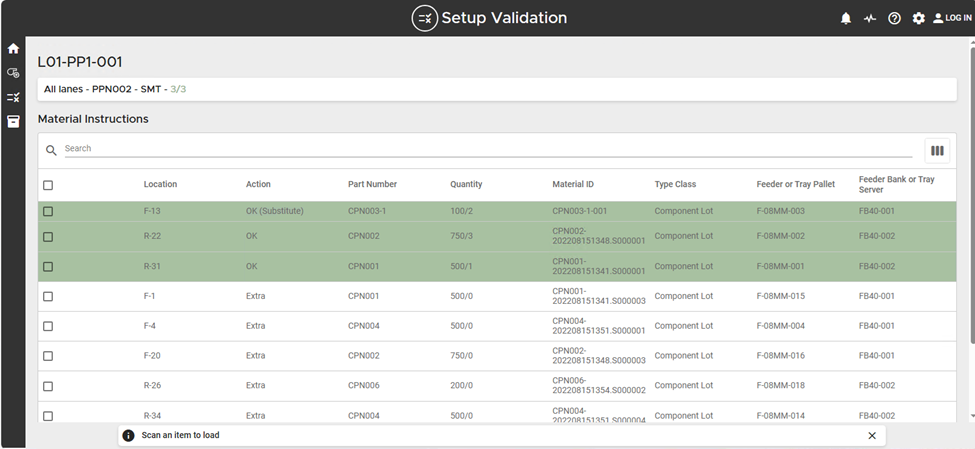
Set-up validation screen for SMT Lines
Another proactive method demonstrated in the Cogiscan platform is with the Route Control module – this application prevents PCBAs from deviating from the expected route. For example, say a defect is found at AOI for a specific PCBA and should be routed to repair before going to the conformal coat operation –– the Cogiscan system will block it from accidentally going the original planned route to be conformal coated, and will produce an error if the unit is sent there without going to repair first. This simple route control module prevents tying up resources with unnecessary re-work and even scrapped boards.
This proactive approach is absolutely critical for high-reliability sectors like aerospace, medical, and automotive electronics, where a single error can have catastrophic consequences.

Explore Cogiscan’s traceability in-action with automotive electronics manufacturer, Siix EMS Mexico
The Role of Analytics in Continuous Improvement
Active traceability in electronics manufacturing, as a core pillar of electronics manufacturing traceability, ensures accuracy during the production process, and analytics takes it a step further by unlocking operational intelligence (oftentimes unforeseen intelligence) across the entire factory.
Real-time SMT analytics allow manufacturers to monitor production in-process and displays information about bottlenecks, errors, and inefficiencies before they escalate. Important metrics that can be measured, visualized, and calculated to send alerts (when deviating from expectations) include Current Production Status, Units Completed Per Hour, Average Line Cycle Time, First Pass Yield, and many more.
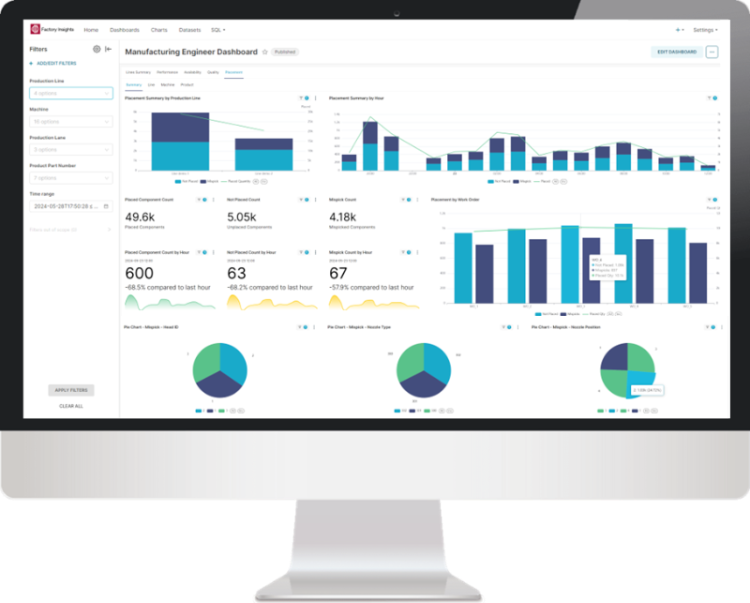
Historical SMT analytics provide deep insights into trends and patterns of the overall production process, enabling data-driven decisions for continuous optimization. Especially helpful for the quality department in any electronics manufacturing operation, these analyses allow comparisons to be performed –– detailed analyses into defects found across different products, AOI machines, and even solder paste used can help pinpoint known quality issues as well as contribute to continuous improvement efforts.
From granular details like spindle performance on placement machines to macro-level metrics such as cycle time across different SMT lines, visualized analytics empowers manufacturers to clearly:
- Identify areas for improvement.
- Optimize resource utilization.
- Reduce downtime and increase throughput.
- all in all reducing errors (costs) and improving product quality as well as your profit margins!
Shared Infrastructure for Maximum ROI
Both active traceability and factory analytics use the same underlying data infrastructure to collect, store, and access shop-floor data. Installing both systems simultaneously is the most cost-efficient approach for many manufacturers as they can easily:
- Error-proof production with minimal scrap and waste.
- Leverage Factory-wide intelligence to drive holistic efficiency.
Unlocking the True Value of Smart Manufacturing
In the fast-paced and unpredictable environment of electronics manufacturing, it’s both too costly and too risky to rely on reactive methods to monitor production quality and performance. Active traceability ensures every product is assembled correctly in real-time, while analytics transforms raw production data into actionable intelligence. Together, they form a powerful foundation for building a smarter, more resilient SMT operation… especially for high-reliability products where “zero-defects” is the goal.
Eager to explore active traceability in your manufacturing operation? Connect with us today to see how together we can provide a proactive strategy to your shop-floor.